
Arizona Probate Court Records
Arizona probate court records are kept by Superior Courts in each of the state's 15 counties. These public records cover estate administration, guardianships, conservatorships, and will filings. You can search for probate cases through county clerk offices or use state online portals to find basic case data. Each county sets its own fees and has its own probate procedures, though all follow Arizona's probate code under Title 14 of the Arizona Revised Statutes.
Arizona Probate Records Quick Facts
Where to Search Arizona Probate Records
Probate records in Arizona are held at the county level. The Superior Court in each county handles all probate matters. This includes estates of people who died, guardianships for adults and minors, and conservatorships to protect assets. The Clerk of the Superior Court keeps these files and can help you find case information.
You have a few ways to look up probate records in Arizona. The state runs an online portal called Public Access to Court Case Information that covers 153 of the state's 180 courts. This free tool lets you search by party name or case number. You can find basic case data like filing dates and hearing schedules. However, the level of detail varies by county. Some courts post more than others do. For full documents and certified copies, you will need to contact the county clerk directly or visit in person.
The Arizona Judicial Branch also offers the eAccess portal for viewing case documents online. This system provides 24/7 access to unrestricted court records. Documents cost $10 each to view, and you can preview the first page free. Keep in mind that probate, juvenile, and family cases are not available through eAccess in many counties due to privacy rules. You will need to request these records from the clerk's office instead.
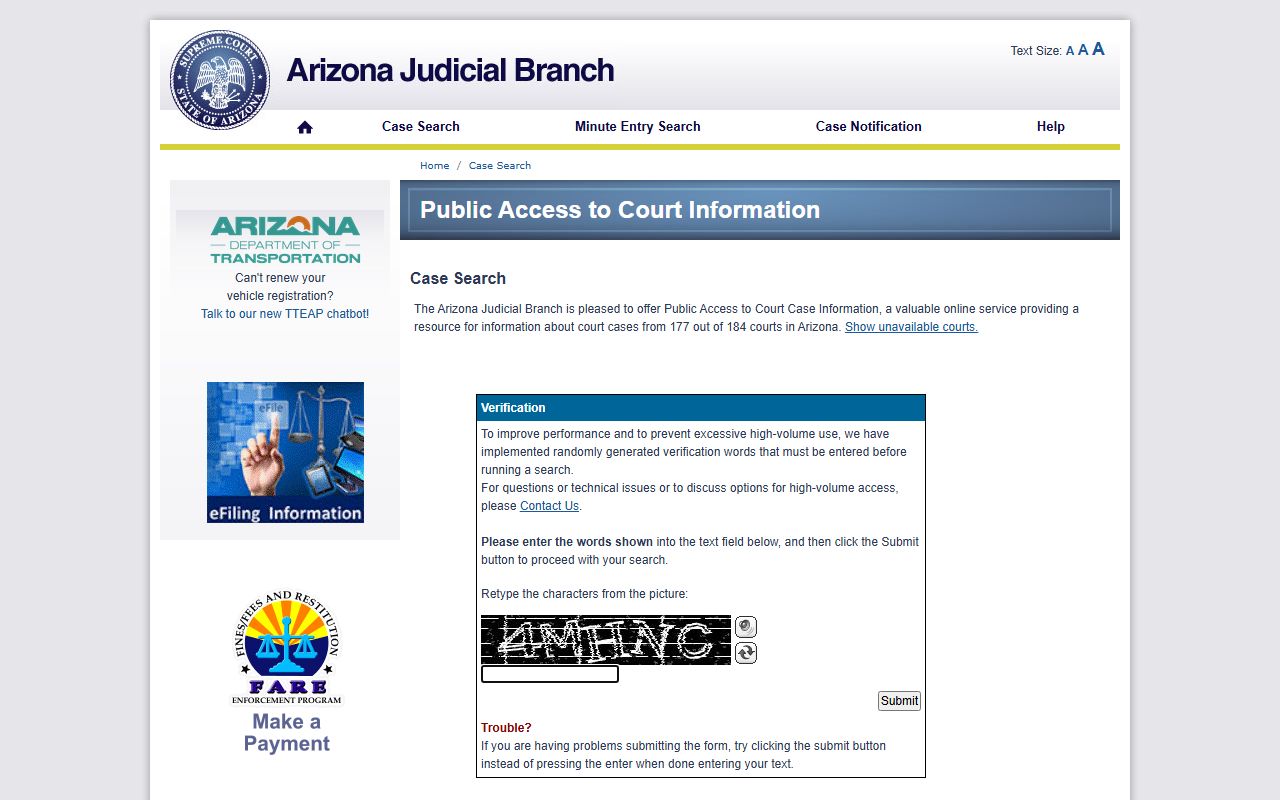
The screenshot above shows the state's Public Access portal. You can search for Arizona probate cases by name here.
Note: Online access to probate documents is limited in Arizona. Most counties require in-person visits for full file review.
Types of Probate Cases in Arizona
Arizona Superior Courts hear several types of probate cases. The term "probate court" covers more than just estates. It includes any case where the court must protect a person or their property. Understanding these case types helps you know what records to search for and where to find them.
Estate probate is the most common type. When someone dies, their assets may need to go through probate before passing to heirs. This process involves filing the will with the court, appointing a personal representative, paying debts, and distributing what remains. Arizona offers both informal and formal probate. Informal probate is faster and works when there is a valid will and no disputes. Formal probate requires a judge to resolve conflicts or complex issues. Both create court records you can search.
The Arizona Judicial Branch probate portal describes these case types in detail. According to this resource, probate courts also handle guardianships and conservatorships. A guardianship gives someone authority to make personal decisions for another person who cannot do so themselves. A conservatorship protects the financial interests of someone who cannot manage their own assets. Both require court oversight and create detailed records.
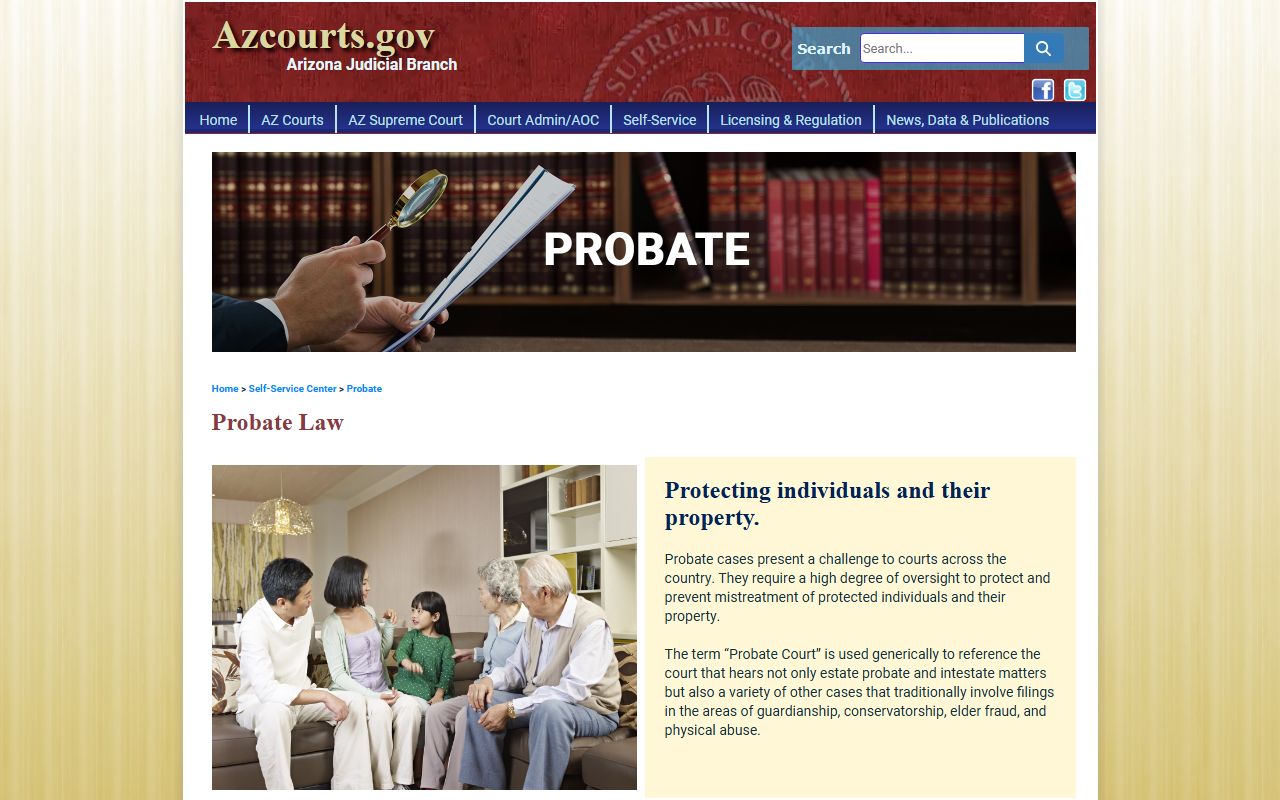
This portal serves as the main hub for Arizona probate information and forms.
Arizona Small Estate Affidavit Process
Not every estate needs full probate in Arizona. The state allows a simplified process for smaller estates. Under A.R.S. Section 14-3971, you can use an affidavit to transfer assets without opening a probate case. This saves time and money when the estate meets certain value limits.
For personal property, the limit is $200,000 after subtracting any debts tied to those assets. You must wait at least 30 days after the death before using this method. The affidavit does not need to be filed with the court. You present it directly to whoever holds the property, like a bank or employer. They can then release the assets to the rightful heir. This process works well for bank accounts, vehicles, and other items that do not require a court order to transfer.
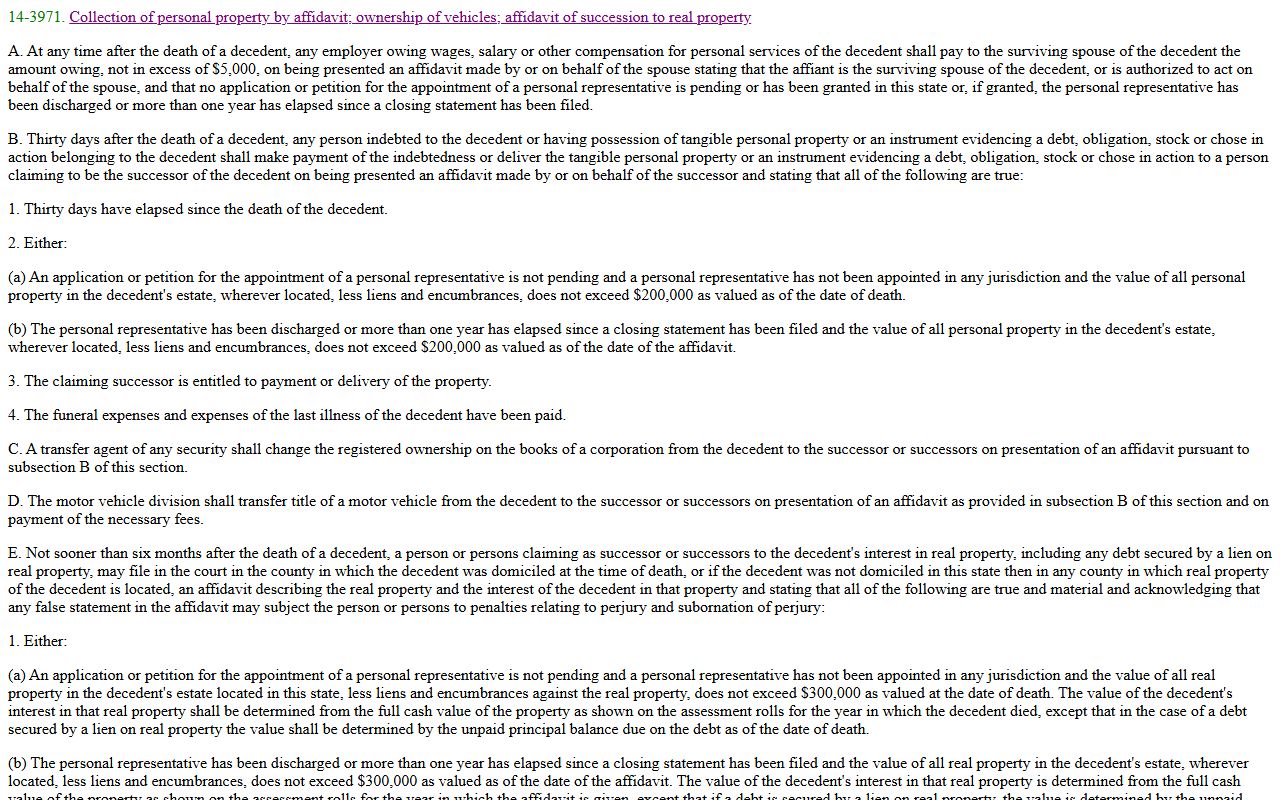
Real property follows different rules. The limit is $300,000 in equity. You must wait six months after the death. Unlike personal property, you do file this affidavit with the Superior Court. The clerk records it, and then it serves as proof of your right to the property. This creates a court record that others can search later.
Note: These thresholds were recently increased from lower amounts. Always verify current limits with the county clerk before filing.
How to File Probate in Arizona
Filing for probate in Arizona starts at the Superior Court in the county where the deceased person lived. You will need the original will if one exists. The court keeps this document permanently. You cannot get it back once filed. Make copies before you submit it.
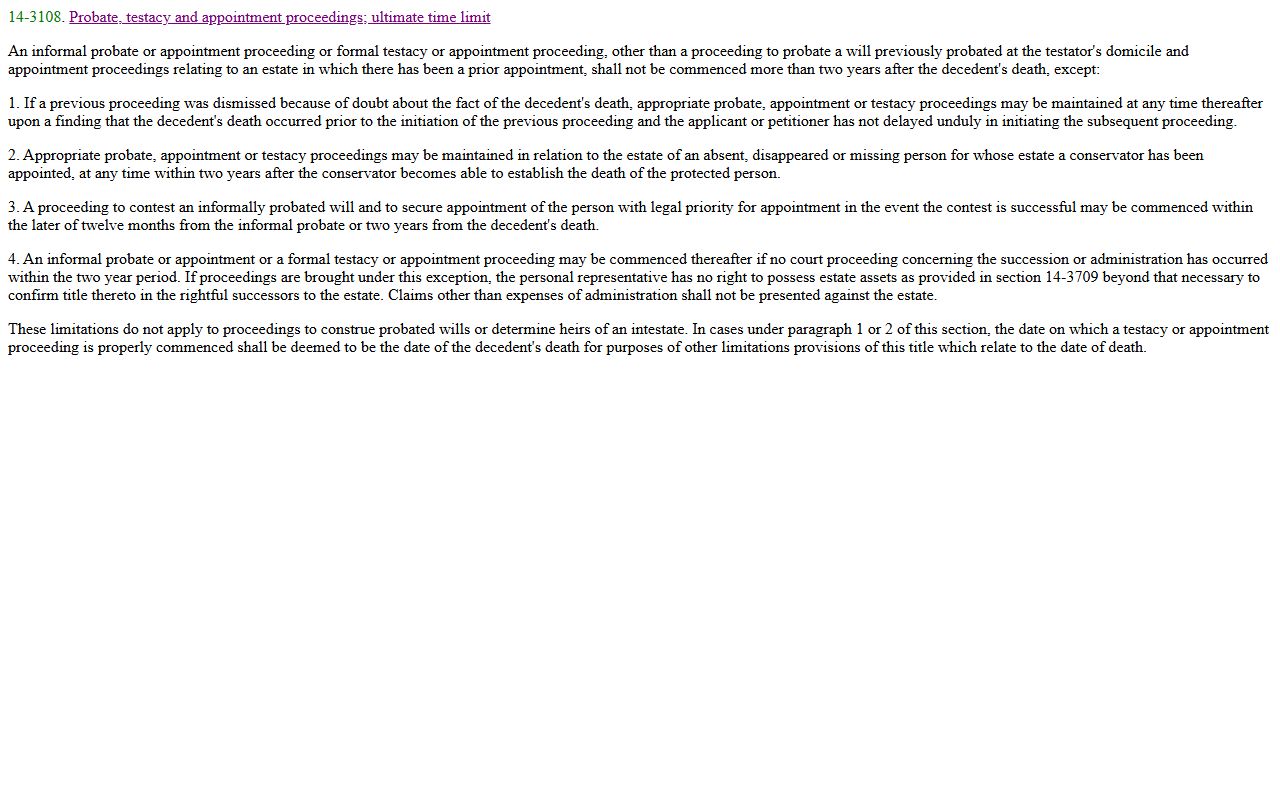
Arizona has strict time limits for probate filings. Under A.R.S. Section 14-3108, you must start the case within two years of the death. After this deadline passes, you generally cannot open a new probate case. Some exceptions exist, but they are narrow. The two-year rule applies to both informal and formal proceedings.
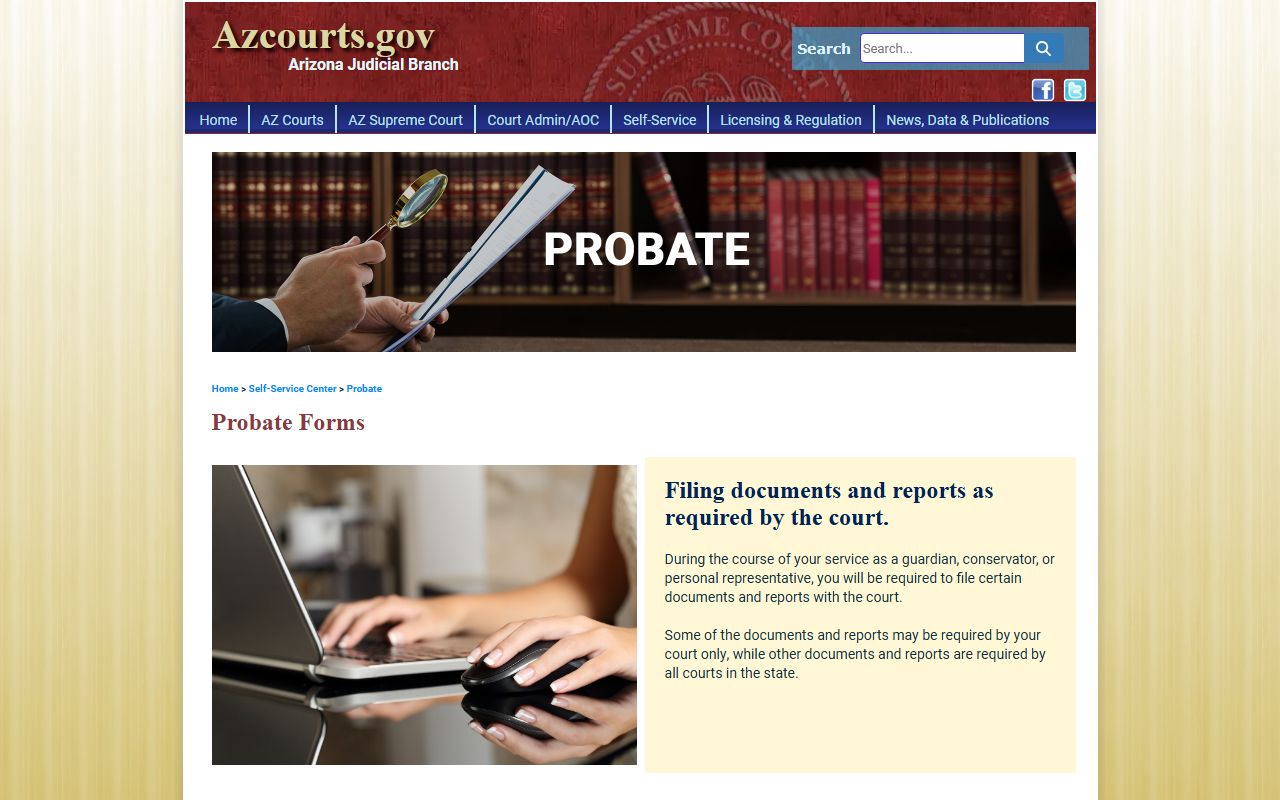
The state provides standard forms for most probate filings. Visit the Arizona Courts probate forms page to download what you need. These forms work in all 15 counties. They cover applications for personal representative, guardianship petitions, conservatorship filings, and required reports. Each form has instructions to help you fill it out correctly.
Arizona courts use an electronic filing system called eFileAZ. Attorneys must file electronically in most cases. Self-represented parties can file on paper at the clerk's window. However, case-initiating documents and original wills cannot be e-filed. You must submit these in person or by mail. After the case opens, you can e-file subsequent documents in many counties.
Arizona Probate Training Requirements
Arizona requires training for anyone who serves as a personal representative, guardian, or conservator. This rule comes from Rules 38 and 42 of the Arizona Rules of Probate Procedure. The training must be completed before the court issues permanent letters of appointment. A person who gets a temporary or emergency appointment has 30 days to finish the training.
Licensed fiduciaries and financial institutions are exempt from this rule. The requirement applies only to non-licensed individuals, which includes most family members. The training covers duties, reporting obligations, and how to handle the assets of the protected person or estate. You must sign a declaration stating you completed the training before the court will grant full authority.
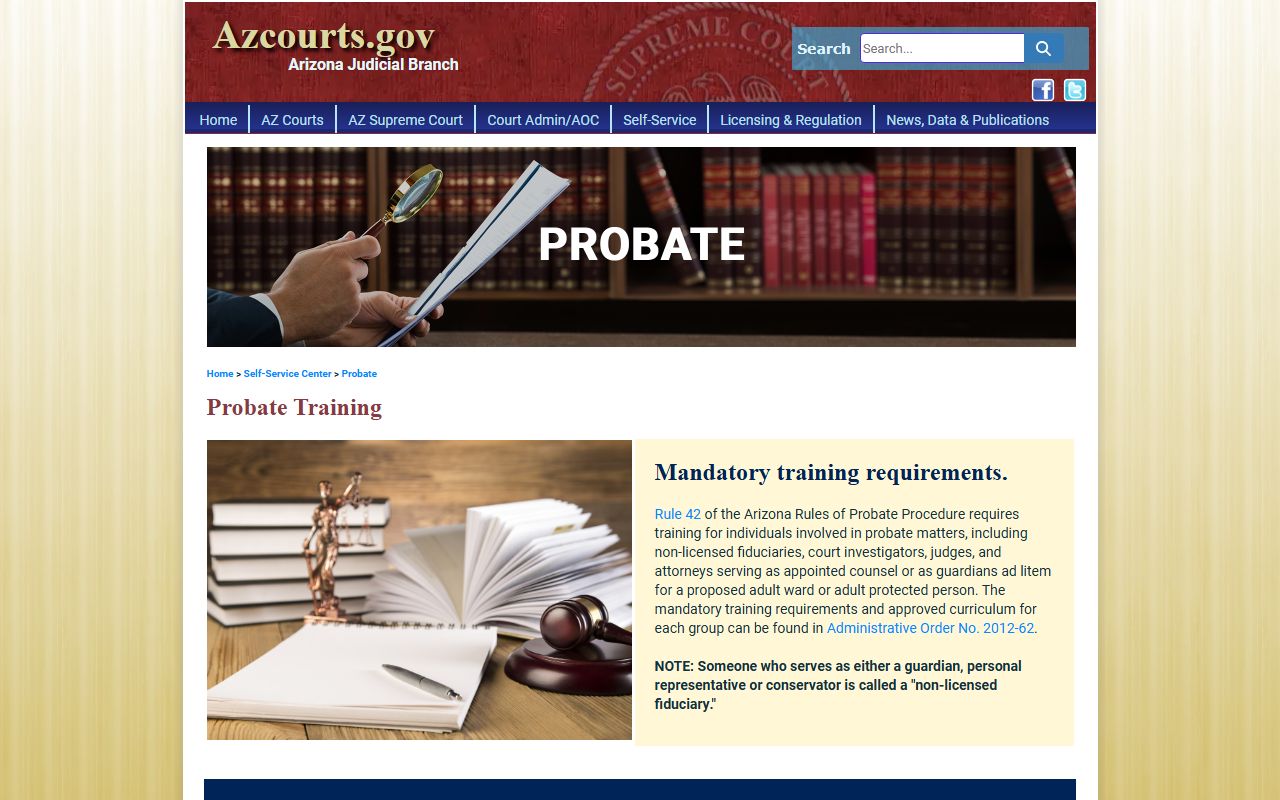
The Arizona Courts training page lists approved programs. These include online videos that you can watch at home. The training takes a few hours to complete. After you finish, you file a certificate with the court as part of your case record. This requirement helps protect vulnerable people and ensures that fiduciaries know their legal duties in Arizona.
These training records become part of the probate case file that anyone can search.
Arizona Probate Filing Fees
Filing fees for probate cases vary by county in Arizona. Each Superior Court sets its own fee schedule. This means you might pay a different amount depending on where you file. The type of case also affects the cost. Here are typical fees from several Arizona counties:
- Maricopa County: $306 for informal probate or guardianship petitions
- Pima County: $146 for informal probate filings
- Pinal County: $251 for probate applications
- Mohave County: $371 for informal probate or appointment petitions
- Yuma County: $281 for informal probate applications
Additional fees apply for services like certified copies, which cost $35 in most counties. Regular copies run about $0.50 per page. Research fees for locating old documents are typically $35 per year searched. Probate investigations and accounting reviews have their own charges, often ranging from $300 to $400.
If you cannot afford the filing fee, Arizona offers fee waivers. You must file a request and show proof of low income. The court will review your finances and decide if you qualify. This option is available in all Arizona counties for those who meet the criteria.
Note: Fees change periodically. Contact the clerk before filing to confirm current costs.
Historical Probate Records at Arizona State Archives
Older probate records in Arizona may be held at the State Archives rather than the county courthouse. Under state law, Superior Court records that are 50 years old or older must be transferred to the Arizona State Archives. This includes probate cases, wills, guardianship files, and related documents from the territorial period through the mid-20th century.
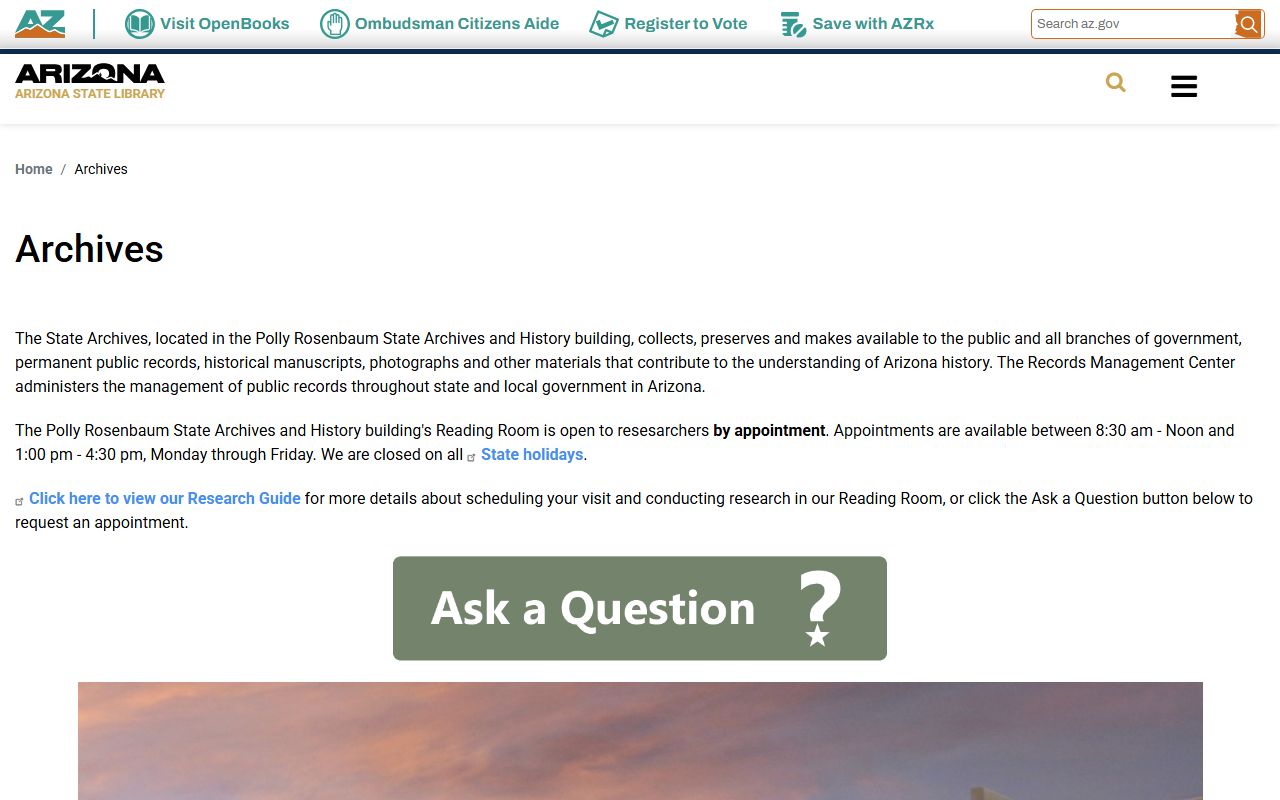
The Archives is located at 1901 W. Madison Street in Phoenix. Visits are by appointment only. Hours are Monday through Friday, 8:30 AM to noon and 1:00 PM to 4:30 PM. You can reach them by phone at 602-926-3720. The facility houses permanently valuable records dating back to 1863 when Arizona became a territory. If you are searching for probate records from before the 1970s, the Archives may be your best source.
The public records section of the Archives website explains what is available and how to request copies. Most court records are open to the public. Exceptions include some adoption files, juvenile cases, and mental health records. The Archives also partners with Ancestry.com to provide digital access to some collections. You can use these resources at the Archives for free.
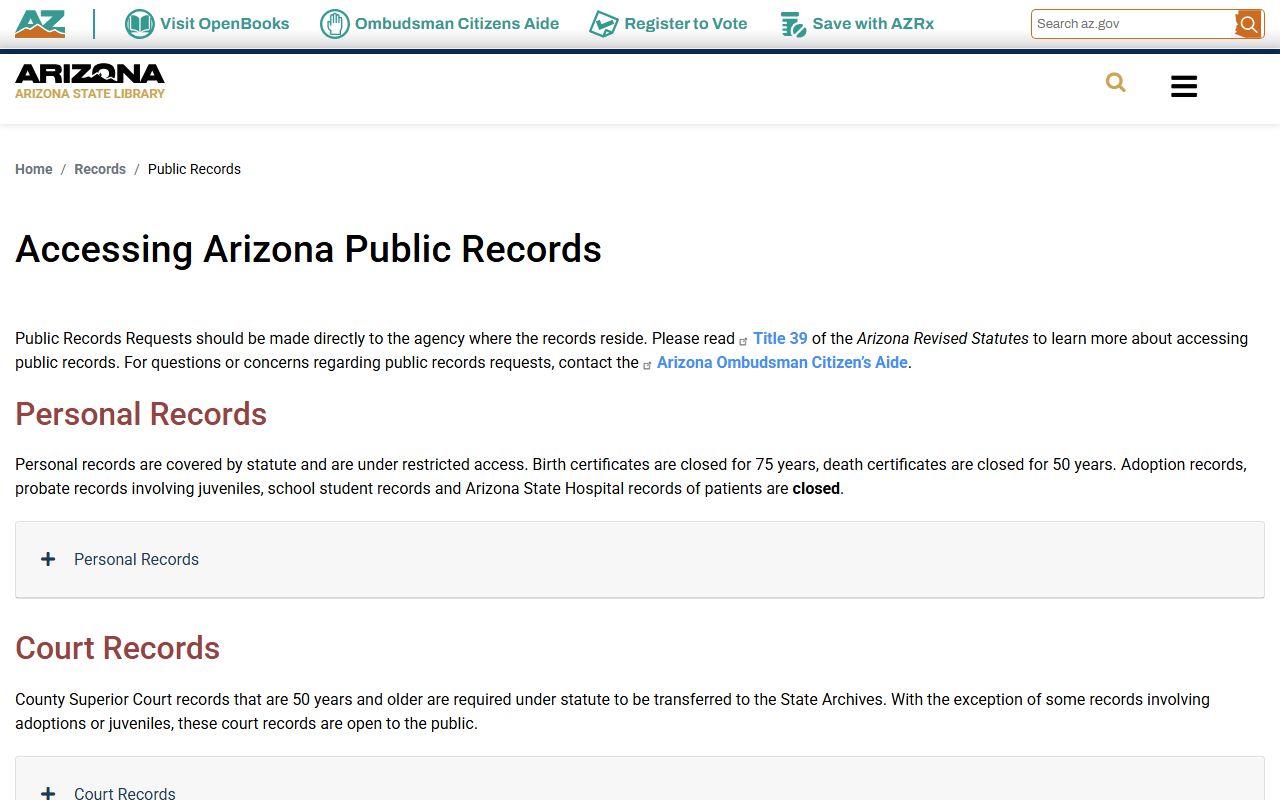
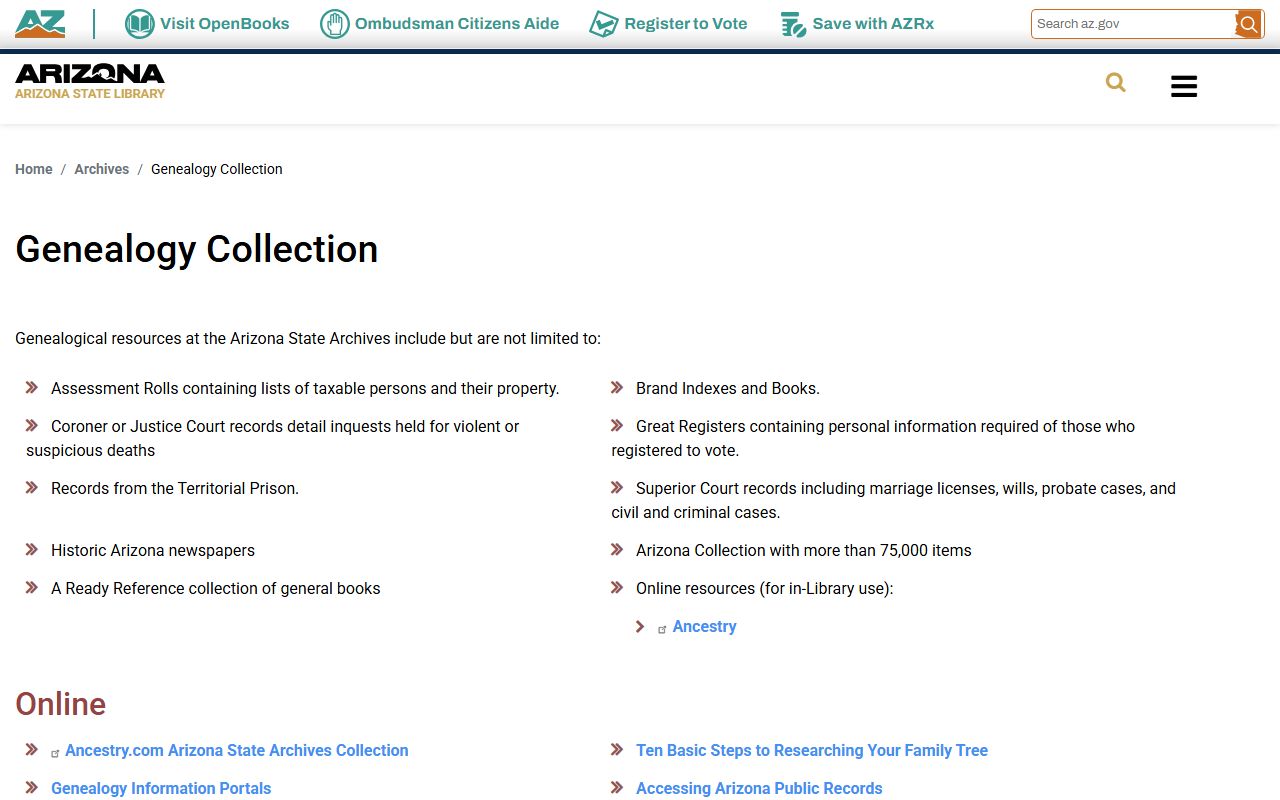
For genealogy research, the Archives offers online resources that may include probate indexes and digitized documents.
Arizona Probate Laws Under Title 14
All probate matters in Arizona fall under Title 14 of the Arizona Revised Statutes. This title covers trusts, estates, guardianships, conservatorships, and protective proceedings. It sets the rules for how probate cases must be handled and what records courts must keep. Understanding these laws helps you know what to expect when searching for or filing probate records.
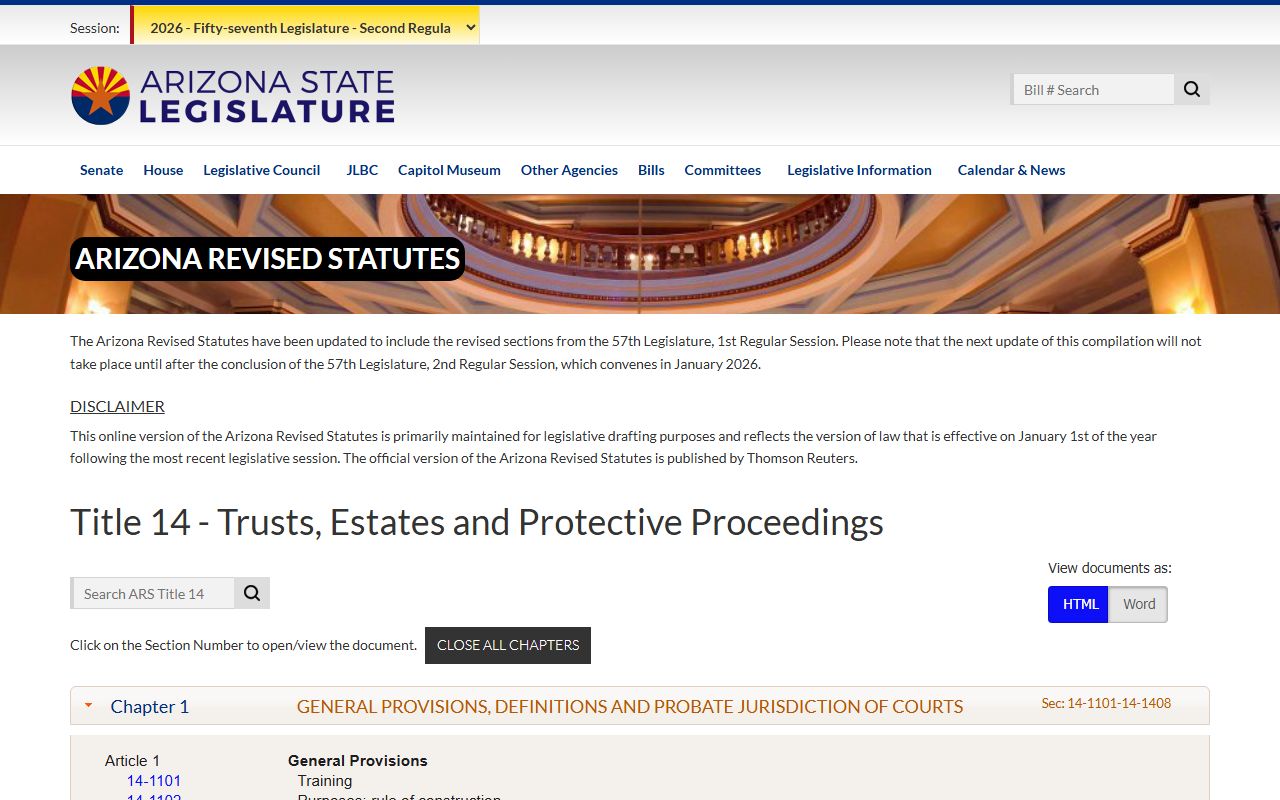
Key provisions include definitions of who qualifies as a personal representative, how estates must be distributed, and what happens when someone dies without a will. Arizona uses a version of the Uniform Probate Code, which means its laws are similar to those in many other states. However, Arizona has made its own modifications over the years. Always check the current statute text rather than relying on general summaries.
The statutes also cover electronic wills. Arizona now recognizes wills executed and maintained on electronic media. This is a newer development that affects how some probate records are stored and accessed. Traditional paper wills remain more common, but you may encounter electronic versions in recent cases.
Self-Service Probate Resources in Arizona
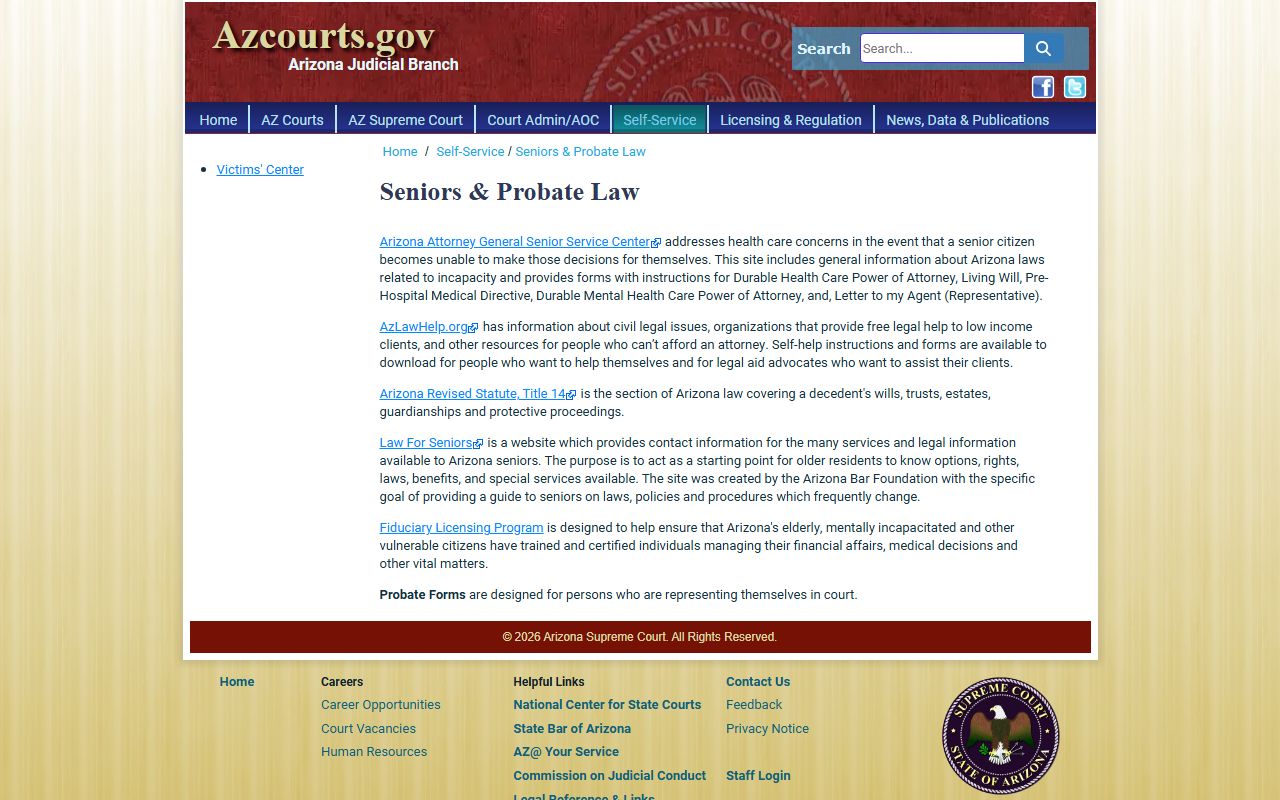
Arizona provides several resources to help people handle probate matters without a lawyer. The Seniors and Probate Law self-service page offers guides, forms, and frequently asked questions. This resource is useful for family members dealing with a loved one's estate for the first time.
Many county courts also have self-help centers. Staff cannot give legal advice, but they can help you find the right forms and explain court procedures. These centers are especially helpful in Maricopa County, which has a dedicated Probate Lawyers Assistance Program offering free consultations to eligible low-income residents.
Electronic filing has made some tasks easier. The eFileAZ system lets you submit documents online after your case is open. Not all document types can be e-filed, but many routine filings can. Check with your county to see what options are available.
Browse Arizona Probate Records by County
Each of Arizona's 15 counties has a Superior Court that handles probate matters. The Clerk of the Superior Court keeps all case files and can help you search for records. Pick a county below to find local contact information and filing details.
Probate Records in Major Arizona Cities
Residents of Arizona cities file probate cases with their county Superior Court. Pick a city below to learn which court handles that area and how to access local probate records.